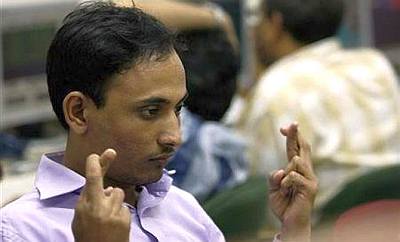
Investors remain cautious ahead of F&O expiry.

Sensex closed 63.82 points higher at 26,851.05 in Muhurat trading; Nifty rises 18.65 points to end at 8,014.55.

They are followed by Shenzhen SE, NYSE and Shanghai SE, as per an analysis of data compiled by the World Federation of Exchanges
The quantum of FPI investments via P-notes remain unchanged at 6.6 per cent in March.

Overall forex market sentiment suffered a sudden reversal of fortune contrary to expectation largely moving in line with local equities, reversing all early strong gains.

Indian equity markets registered their highest single-day percentage gains since early October.

The department of economic affairs, in its Monthly Economic Review for September, said critical reforms undertaken by the government will put India to a strong and sustainable growth path in the long run.
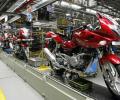
Indian two-wheeler majors Hero MotoCorp and Bajaj Auto are the biggest beneficiaries of this surge and, between the two, they are estimated to control about half of the local market there

In contrast, investors' wealth had surged by over Rs 1 lakh crore (Rs 1 trillion) to Rs 70,44,431 crore (Rs 70,444.31 billion) in 2013.

'Quality of management, corporate governance, allocation of capital, full disclosures should form the basis to decide investing in a particular stock.'

Financials are the top gainers along with index heavyweights.
At the recently concluded Dubai airshow, Akasa, Rakesh Radheyshyam Jhunjhunwala's new airline, signed a $9 billion deal with American aircraft maker Boeing to buy its 737 MAX planes and a $4 billion one for engines with CFM, a joint venture between GE of the US and Safran of France. Unlike his financial doppelganger Warren Buffett, who divested billions from his airline stock portfolio at the start of the pandemic, Jhunjhunwala is wagering his billions in a brand new airline. The legendary investor bought a roughly 40 per cent stake in SNV Aviation in September, Akasa's holding company, started in March by three former Jet Airways colleagues. With aviation still to recover from its pandemic slump, the big question around his foray into domestic aviation, due to take off in summer 2022, is whether it is another pie in the sky.

Shares of small-cap companies have been on a roll with the S&P BSE Small-Cap index hitting a new high in intra-day deals on Thursday. The rally has been fueled by an up move in stocks of chemicals, cement, graphite electrode makers, pharmaceuticals and information technology (IT) shares. In the past two weeks, since March 25, the index has outperformed the market by gaining 7.3 per cent. In comparison, the S&P BSE Midcap index was up 6.1 per cent, while the S&P BSE Sensex gained 3.6 per cent during the same period.

Bonuses are typically commensurate with deal activity in any given year. Investment banks, on average, pocket 2-3 per cent as fees for managing an IPO and 1.5-2 per cent for handling QIPs.
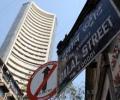
The Sensex ended below 28,000 for the second straight day at 27,869.
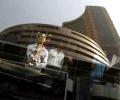
Market players said the sell-off was triggered by pessimism that the government may not be able to balance growth with macro-stability.
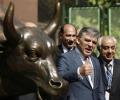
Market breadth continued to remain strong, with 1899 gainers and 674 losers on the BSEs.

With this, the total SIP contribution in the first seven months of the current financial year rose to Rs 57,607 crore as compared with Rs 52,472 crore in April-October 2018, according to the latest data from the Association of Mutual Funds in India (Amfi).
Nearly 400 stocks hit their 52-week low on BSE on Thursday.

Above normal monsoon forecast and strength in Asian equities lifted sentiments.

Business failures rise when growth declines. When Indian growth slowed in the last decade, defaults increased. This is the normal working of the market economy, points out Ajay Shah.

Pharma shares extended losses after the government's ban on combination drugs.

The BSE Midcap and Smallcap indices have performed better than the front-liners

Agriculture activity, according to recent channel checks by Prabhudas Lilladher, is expected to continue at a strong pace in FY22.
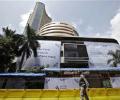
Capital goods, IT, auto and pharmaceuticals lead gains for the financial year

ICICI Bank was the top loser along with index heavyweights RIL, ITC and HDFC.

Overnight, the Wall Street closed on a flatter note.

In the broader market, BSE midcap and BSE smallcap indices underperformed the larger counterparts and ended flat with a negative bias.

Underweight on the sector since January amid concerns over growth prospects; no early reversal seen

The rupee had closed barely steady at 63.75 on Wednesday.

Of the total, 55-60 per cent investments are made by overseas PE firms, he said, added that "for the year ahead, leading PE firms such as ChrysCapital and Henderson Equity Partners have several deals in the pipeline".

Stocks of companies having operations and exports to Europe were the top losers.
They also warned that banks will start reporting higher non-performing assets after September, once the six-month moratorium on loan repayment ends.

On Thursday, the rupee jumped 50 paise to close at 62.67 against the Greenback on persistent selling of dollars by banks and hopes of capital inflows in view of a strong equity market.

Financial shares were among the top Sensex gainers along with auto and pharma shares.
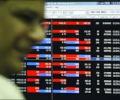
The 30-share Sensex ended up 140 points at 28,262 and the 50-share Nifty was up 37 points at 8,551.

Mark Mobius, co-founder, Mobius Capital Partners, tells Puneet Wadhwa that investors should concentrate more on "value" rather than momentum, and on good small- and medium-sized companies rather than large-caps.

PSU divestment, LIC IPO, fiscal deficit: Budget 2021 marks a clear change in the Modi government's stance from fiscal conservatism to growth orientation.
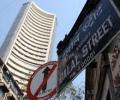
The 30-share Sensex ended up 33 points at 27,241.78 and the 50-share Nifty ended up 27 points at 8,200.70.

Weakness in Infosys, L&T and Hindalco cap index gains.
